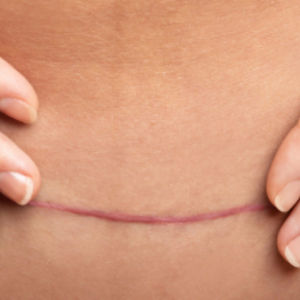
What type of Scar Do I Have?
Scars come in many different forms. Some heal flat and fade over time, while others may stay raised, tight, sensitive, or uncomfortable.
Many scars share similar features, and it’s common for a scar to show characteristics of more than one type, within the same scar. This means parts of your scar maybe red and raised, while other parts are flat and pinned in. There is nothing wrong with this. Your body is doing the best it can to heal well.
Understanding what type of scar you have can help you choose the most appropriate treatment.
The guide below shows some of the most common scar types to help you understand your next step and what possible treatment options may help.

Common Types of Scars
Hypertrophic Scar


A hypertrophic scar is a raised scar that stays within the original wound area (this scar can be red and raised and look a bit like a red “bootlace” across the scar).
Did you know that 50% of all scars become hypertrophic, so its very common to have a raised scar like this.
How it occurs
During healing, the body produces collagen to repair the damaged tissue. In hypertrophic scars, the body produces more collagen than needed, and it builds up on top of the scar.
This excess collagen causes the scar to become thick, raised, and sometimes red or inflamed. Over time, the body may slowly break this down, but the scar can remain prominent and sometimes cause irritation.
Typical Features of a hypertrophic scar:
-
Raised above the skin.
-
Red, pink, or darker in colour.
-
Often itchy or sensitive.
-
Stays within the original scar line.
How it may be treated
Treatment often focuses on helping the body remodel excess collagen and reduce thickness.
This may include hands-on scar therapy, massage techniques, silicone, negative pressure and compression. These varied approaches help to improve flexibility, reduce sensitivity, flatten the scar and reduce itch and discomfort.
Got a Hypertrophic Scar?
The next step is understanding what caused the scar or where it is on the body, as treatment approaches can vary.
Click the option that best matches your situation:
Keloid Scar


Keloids are a type of raised scar that grow beyond the original borders of the original incision on the skin.
How it occurs
Keloids develop when the healing process becomes overactive and continues beyond what is needed.
Instead of stopping once the wound has healed, the body keeps producing collagen, on top of collagen, causing the scar tissue to spread beyond the original injury and continues to grow (up and out).
This can happen months after the initial injury and may continue over time.
Keloid scars are more prevalent if you have:
A family history of keloid scars (a genetic disposition to having keloids)
and/or
Have darker pigmentation of your skin.
Typical Features of a keloid scar:
-
Thick, raised scar tissue.
-
Extends beyond the original scar.
-
May continue growing over time.
-
Can feel itchy, tender is sensitive and may pull.
How it may be treated
Keloid scars often require a more specialist approach, as the tissue can continue to grow over time.
Treatment may involve a combination of therapies aimed at managing scar growth, reducing discomfort, and improving tissue behaviour. This can be a targeted approach using: Silicone strips and silicone gels, compression garments, direct scar massage, steroid tape or steroid injections, Cryotherapy (freezing of the scar) and in more severe cases, revision of the scar.
Got a Keloid Scar?
The next step is understanding what caused the scar or where it is on the body, as treatment approaches can vary.
Click the option that best matches your situation:
Atrophic (Indented) Scar


Atrophic scars appear sunken or indented in the skin.
How it occurs
In this type of scar, the body does not produce enough collagen during healing.
This leaves a loss of tissue in the area, creating a dip or indentation in the skin. The surrounding skin may also appear thinner.
These scars are often linked to conditions where the skin structure is affected, such as acne or chickenpox.
Typical Features of a atrophic scar:
-
Sunken or pitted appearance.
-
Skin may appear thinner in the area.
-
Often small depressions or indentations.
How it may be treated
Treatment may focus on improving the quality and function of the surrounding tissue and supporting collagen activity in the area. Treatment can include: scar massage, hydrating the scar and surrounding area, laser therapy, negative pressure.
This can help improve how the skin feels and functions, even if the appearance does not fully change.
Got a Atrophic Scar?
The next step is understanding what caused the scar or where it is on the body, as treatment approaches can vary.
Click the option that best matches your situation:
Normotrophic (Normal) Scar


A normotrophic scar is a scar that has healed in a typical way. It usually becomes flat and lighter in colour over time.
How it occurs
When the skin is injured, the body repairs it by producing collagen to rebuild the tissue. In a normotrophic scar, this process is well balanced.
The body produces enough collagen to heal the area, and then gradually remodels the tissue so it becomes softer, flatter, and more flexible over time.
Even though this is considered normal healing, some people may still notice tightness or sensitivity in the area.
Typical Features of a normotrophic scar:
-
Flat and level with the skin.
-
Pale or slightly lighter than surrounding skin.
-
Usually soft and flexible.
-
Stays within the original wound area.
How it may be treated
Even “normal” scars can benefit from treatment, particularly if they feel tight or sensitive.
Treatment may focus on improving tissue mobility, flexibility, and comfort, using hands-on therapy and simple self-care techniques.
Got a Normotrophic Scar?
The next step is understanding what caused the scar or where it is on the body, as treatment approaches can vary.
Click the option that best matches your situation:
Contracture / Burns Scar


Contracture scars develop when scar tissue tightens and pulls the surrounding skin.
How it occurs
As the body heals, the scar tissue can shrink and contract, especially after burns or large injuries.
This tightening process can affect not just the skin, but also deeper tissues, leading to reduced flexibility and movement in the area.
Typical Features of a contracture scar:
-
Tight or stretched skin.
-
Restricted movement in the surrounding area.
-
Skin may feel firm or rigid.
How it may be treated
Treatment often focuses on reducing tightness and improving movement in the affected area.
This may include hands-on therapy, stretching approaches, hydration of the tissues, silicone, compression, negative pressure and scar revision. All these techniques help to improve tissue flexibility, mobility and decrease the pain some scars can cause.
Got a Contracture Scar?
The next step is understanding what caused the scar or where it is on the body, as treatment approaches can vary.
Click the option that best matches your situation:
Vein Shutdown
Vein shutdown is a change in the veins and surrounding tissue that can occur after treatments such as chemotherapy or radiotherapy.
Although it is not a scar in the traditional sense, it can affect how the tissue feels, moves, and functions, in a similar way to scarring.

How it occurs
Some cancer treatments can irritate the veins and surrounding tissue.
As the body responds to this, the vein and nearby tissue can become inflamed, hardened, and less flexible. Over time, this may lead to the vein feeling more like a tight or cord-like structure, with reduced movement in the surrounding area.
The healing process in this case can result in tight, restricted tissue, rather than soft, flexible movement.
Typical Features of vein shutdown:
-
A firm, cord-like structure under the skin.
-
Tightness or pulling through the arm.
-
Sensitivity or discomfort.
-
Difficulty moving the arm freely.
-
Changes in how the tissue looks or feels.
How it may be supported
Treatment may focus on improving the mobility and flexibility of the surrounding tissue, particularly where there is tightness or restriction. Treatments such as hands on scar massage, laser therapy and negative pressure can be beneficial.
However, all scar therapy treatments require a holistic and individualised approach.
Unsure which Scar type you have?
If you’re unsure what type of scar you have, simply email us over a few photos to: hello@scartherapynetwork.com and we’ll let you know.
Scars Change as They Heal
Scars can look and feel different at different stages of healing.
In the early months after surgery or injury, scars are often:
-
Red or pink.
-
Slightly raised.
-
Sensitive or itchy.
Over time, they usually soften and fade. However, some scars remain tight, raised, or uncomfortable, which is where specialist scar therapy may help.

When Should You Seek Scar Advice?
You may benefit from specialist scar advice or treatment if your scar:
-
Feels tight or restricts movement.
-
Is painful, itchy or sensitive.
-
Remains raised or thick.
-
Feels stuck to deeper tissue.
-
Affects your comfort or confidence.
Even older scars can often respond to scar therapy.